
Hi all!
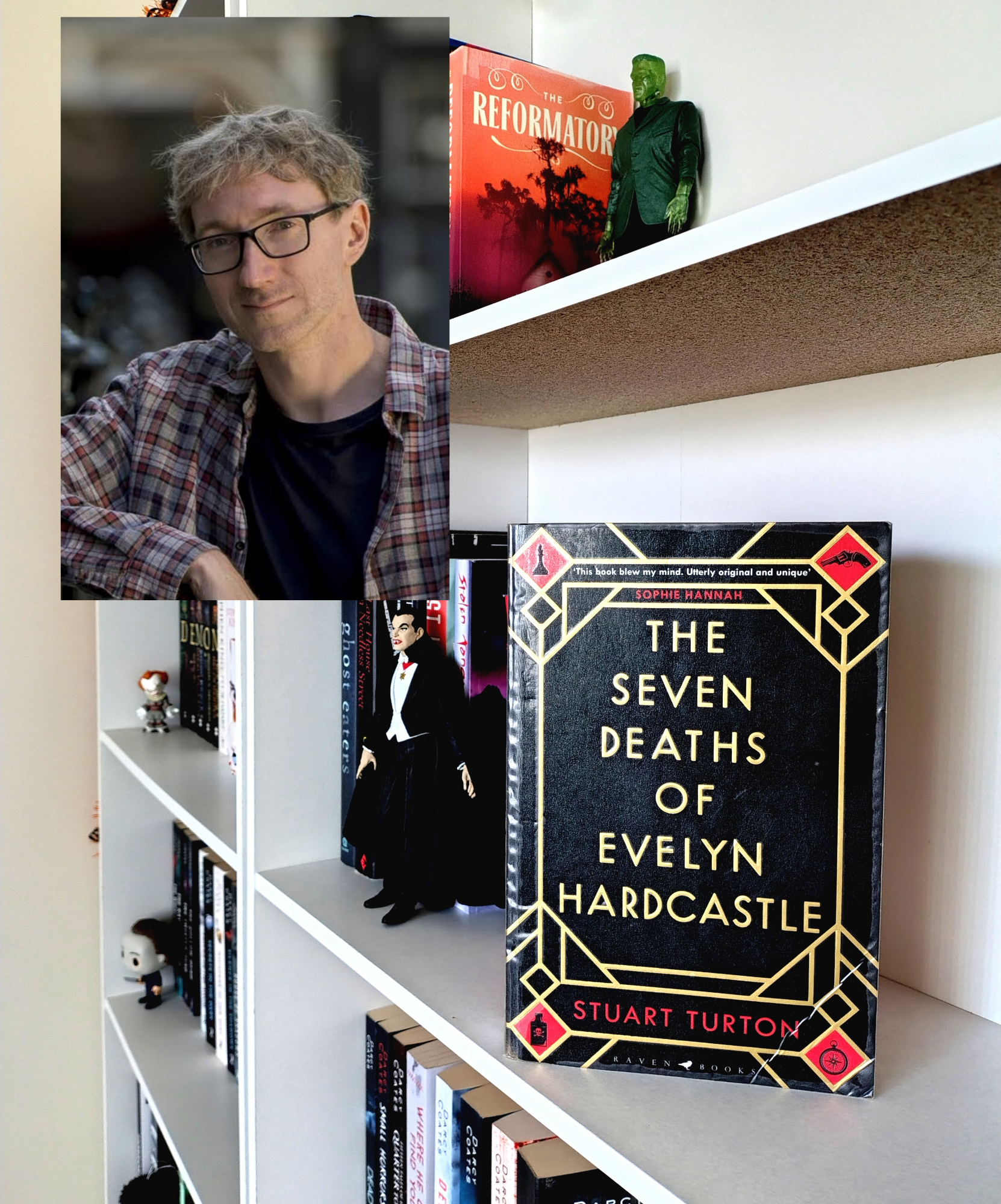
In 2024, I was given the opportunity to interview one of my favourite authors: Stuart Turton. I’ve read every single book he’s released. He is not bound to any specific genres or styles. I’ll never forget the first time I read The Seven Deaths of Evelyn Hardcastle. I couldn’t believe someone had the brilliant mind to come up with it. Since then, he’s published The Devil and the Dark Water and The Last Murder at the End of the World. All three stories are so different from one another. I am positively thrilled to share more about his writing process, inspirations and advice in this post. Without further ado, let’s get into it!
1.) What is one key element/message you hope readers will take away from your books?
I just want people to have fun. There’s so much distraction in the world today, so many other things people could be doing besides reading my crazy books. Every time I sit down to write, it’s with the reader in mind. I want them to have fun, or find something on every page that shocks or surprises them, or leaves a nagging question. There’ll always be themes and subtext – usually things that are bothering me in that moment – but I have no desire to shove it down people’s throats. If you want to find that stuff, it’s there.
2.) Did any horror/thriller films or books inspire ‘The Last Murder at the End of the World?’
I read a lot of John Wyndham and classic 70’s sci-fi novels, like Dune and Isaac Asimov. There’s definitely a bit of Lost in there, and – as with all my books – there’s a huge debt being paid to Agatha Christie and Conan Doyle. I love the tropes they laid down, and I’m always playing in the park they built.
3.) What is your writing style? Do you plan extensively or let the story take you?
Bit of both, truthfully. I plan extensively, then realise the plan’s not working very well about ten minutes into my first writing day. I give myself room to tinker and change along the way, just so there can be room for good ideas and spontaneity. If you don’t give yourself that space, you swiftly realise just how dull writing a book can be. Sitting in front of a computer for six hours a day, expanding on points in a spreadsheet can be tedious in the extreme, unless you can occasionally surprise yourself and go off script.
4.) Do you have any advice for budding authors hoping to make a name for themselves?
It’s in the lap of the gods mostly. Books sell, or don’t, for tons of different reasons – most of which aren’t in your control. If this is the job you want, make sure you derive satisfaction from telling the story you want to tell. Learn to take criticism, and believe in what you’re trying to achieve. If making a name for yourself is your only reason to become an author, you may find it’s a long old slog.
5.) Are you able to provide any insight into your next writing project?
I never talk about my next novels ahead of time, just because it takes away some of the surprises. I’m very privileged in that every novel I write is completely different to the last one. I write in new time periods, with new characters, plots and locations. Nothing’s ever the same. I can surprise my readers with every aspect of my books, not just the resolution to the mystery. That’s such a huge gift I’ve been given. If I spoil any of those surprises ahead of time, I’ve wasted it.
6.) Who are some of your favourite authors and books?
My favourite book is ‘The God of Small Things’ by Arundhati Roy, which is completely perfect. Every sentence, every word, every metaphor and paragraph is immaculate. If I ever need inspiration, that’s the book I read. I don’t really have favourite authors, because there’s no author whose entire canon I’ve enjoyed. And that’s fine. That’s great, actually. It means they’re changing and experimenting. I tend to love novels intensely while I”m reading them, then forget them a week later.
7.) What is your favourite book trope and why?
The locked room murder. I adore it. It’s this amazing promise at the beginning of a book. Something impossible happened, but it wasn’t impossible, and I’m going to unravel it for you and by the time the book ends, you’ll be kicking yourself because you didn’t see what was right in front of you. That’s my favourite thing in books generally, when all the pieces click into place. It’s so satisfying.
8.) If ‘The Last Murder at the End of the World’ was adapted to screen, who would you want to play the lead characters?
I’m terrible at casting my characters, because I know them from the inside out. I know their thoughts and emotions, and what drives them, because that’s what moves my plot. How they look doesn’t really ever have any bearing on how the novel progresses. I’m happy to leave casting decisions to readers and casting directors. I’d love to play a victim though.
9.) Do you ever plan to branch out into genres? If so, which would you like to explore?
One of the beautiful things about crime is that it plays so well with every other genre. So far, my books have gone into sci-fi, fantasy, horror, romance, literary fiction, historical and nautical. I never feel constrained by genre and I don’t really think too much about it until my novel suddenly wanders over into some new area. That’s really cool to realise you’re going to be writing in the Gothic tradition for a little while.
10.) How do you cope with writing slumps and lack of motivation?
I used to be a journalist, which meant that if I didn’t write, I didn’t get paid. That’s extraordinary motivation for not having writing slumps. As for motivation, that’s the difference between amateur writers and professionals. If this is your job, you can’t only do it when you’re motivated, because motivation comes and goes. Being an author means you have to write every day, no matter how you feel.
Thank you so much for reading! Let me know if you’ve ever picked up a Stuart Turton novel.
Peace & Love xoxo

Leave a Reply