
Hi all!
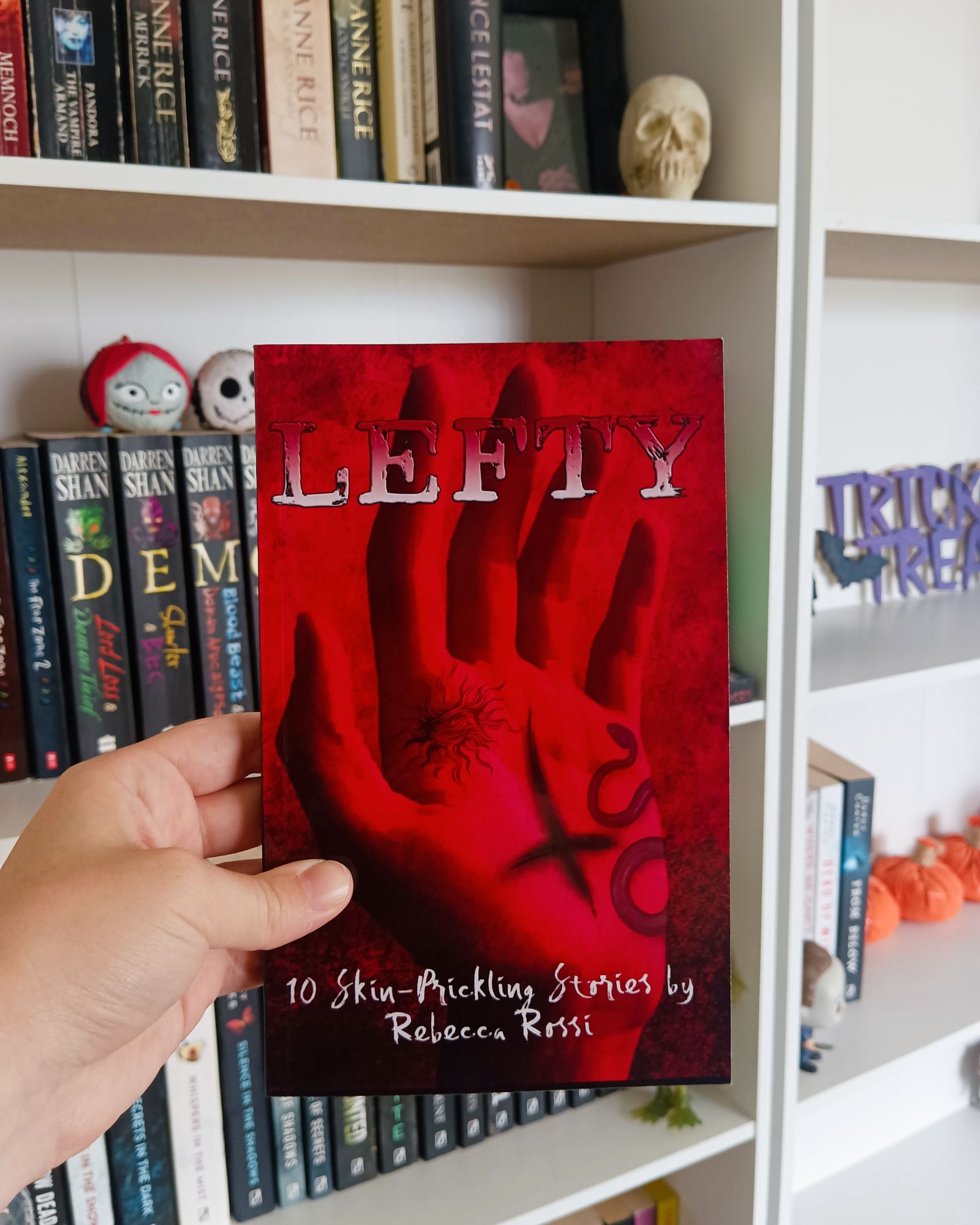
Before we begin, I’m delighted to announce that my new horror, short-story collection, Lefty, is now available to purchase on Amazon! Feel free to pick up an electronic, paperback or hardback copy. I am so proud of this one!
Purchase Lefty here!
Speaking of hands, today I am discussing my dyspraxia diagnosis. Formerly known as ‘clumsy child syndrome’, dyspraxia is a brain-based motor disorder that affects fine motor skills, coordination and planning. I’m sharing this in the hopes it might help somebody else feel seen and understood.
I recommend clicking the link below for even more information.
From the moment I came out the womb, I was an incredibly clumsy child. I struggled with coordination, balance and spatial awareness. My mother was advised to enrol me in tennis lessons to assist with these issues, but no formal diagnosis was ever made. It wasn’t until I reached the age of 34, I started to look into this invisible disability. I booked an appointment with an Occupational Therapist and after several challenging tests, was formerly diagnosed with dyspraxia.
At the time of my diagnosis, my job involved a lot of crafting. I was tasked to do things with my hands that took me much longer than the rest. The final result wasn’t too hot either! I remember telling my supervisor: ‘it’s like I have dyslexia, but with my hands.’ It turns out, I wasn’t too far off. Dyspraxia and dyslexia live under the umbrella of neurodivergence. Learning I was neurodivergent in my mid-30’s was both liberating and saddening at the same time. On one hand, I was relieved to learn there was a reason behind my lifelong struggles. On the other hand (pardon the pun), I began to grieve the life I could’ve had, if I had been diagnosed years ago. I would have been kinder to myself. I wouldn’t have expected so much. I might have played more to my strengths, instead of fighting a losing battle.
Another big deficit when it comes to dyspraxia, is short-term memory processing. I have an incredible long-term memory. I could tell you exactly what you were wearing ten years ago but I’ve already forgotten what you told me ten seconds ago. Unless it’s a topic I’m really engaged in, I’m unlikely to process what a person has said, especially if they speak really fast or unload a lot of information at once. An accommodation at work that has helped, has been getting information in writing. That way, I can continue to process it, the more I read it. I used to wonder what was wrong with me. Why did I forget things almost instantly? Now, I know.
The most basic, everyday tasks are challenging for me. I struggle to do my own makeup and hair. Learning to drive took longer than normal, with plenty of bumps along the way. For some reason, putting keys in locks takes more coordination than it should. I bump into things, drop objects regularly and find myself covered in bruises, not knowing how I got them. Not to mention, my handwriting is insane. I can barely read it myself. I had to do a handwriting test for my OT, which truly proved I was dyspraxic. She asked me to copy a passage from a short story. At the end, I had to tell her what the piece was about, but I couldn’t. I hadn’t processed a single thing I wrote.
Is it curable? No. Dyspraxia is an invisible disability one is born with. Are there accommodations that can be made? Absolutely! Can you improve on a skill? Yes. If you enjoy playing the piano for example, but struggle with finger coordination on the keys, you can get better with regular practice. As dyspraxia belongs under the umbrella of neurodivergence, it’s important to remember it exists on a spectrum. Everybody experiences it differently. This is my version of the condition. I embrace who I am, fully and completely. The amount of comfort my diagnosis has brought me, could not be put into words.
Thank you so much for reading. If you have any further questions, feel free to ask them in the comments.
Peace & Love xoxo





Leave a Reply